
Hello!
We are LUMOS, developer of automated solutions for R&D budget management. Today, we will explain the differences between cash and in-kind contributions, a topic that often confuses many when planning R&D budgets.
Definitions
Cash: The amount received in cash from the government for R&D expenses.
In-Kind: A non-cash valuation representing resources or assets that the company contributes to the project.
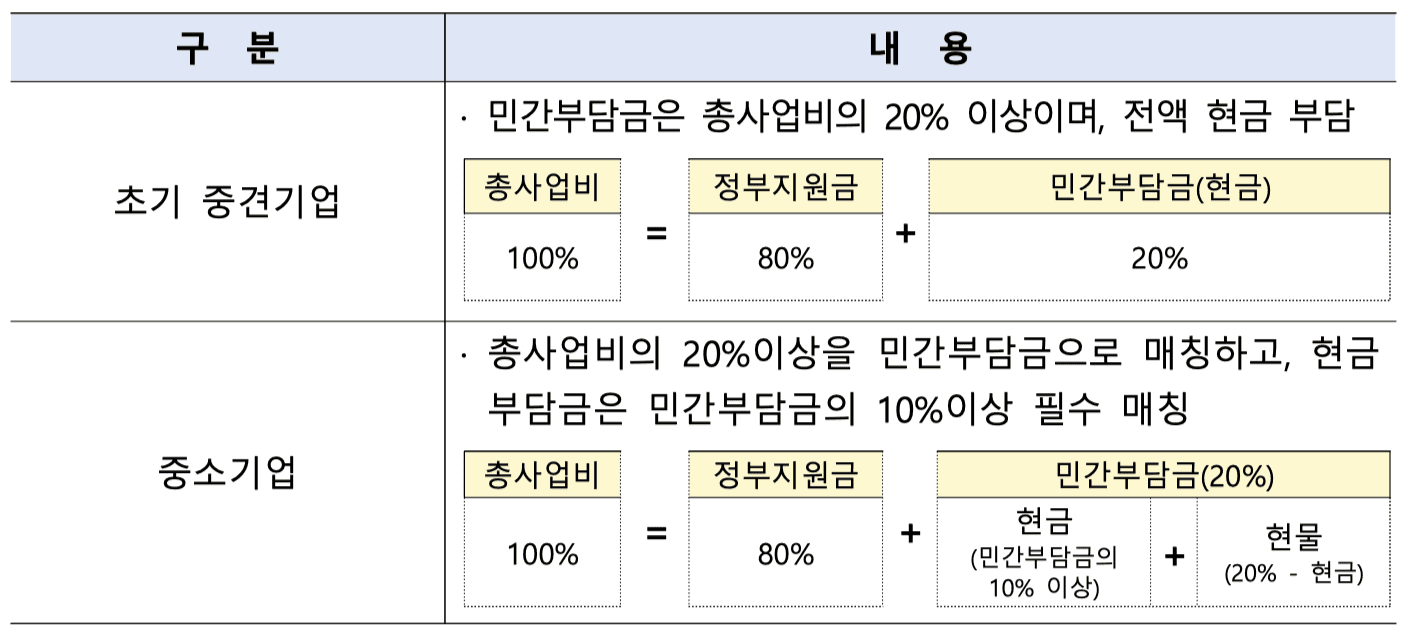
Most government funding projects are divided into government contributions and private matching funds. The government contribution is the amount funded once a project is selected, whereas the matching funds must be provided by the company. Let’s look at an example.
Consider an R&D project with a maximum budget of $100,000. If the announcement states that the government funds 80% and the company funds 20%, then the actual government support your company receives is $80,000 (80% of the total budget), and your company's matching share is $20,000. Depending on the project, this $20,000 matching requirement can be meeting through a specified ratio of cash, in-kind contributions, or a combination of both.
The option for in-kind contributions exists to ease the financial burden on private companies. Necessary expenses that would be incurred regardless of the R&D project—such as personnel costs for executives or existing staff—can be recognized as part of the matching funds, thereby reducing cash expenses. In-kind contributions can include labor costs for representatives or co-founders. They can also cover equipment usage or material costs; however, this is generally not recommended due to complex documentation requirements like depreciation calculations and purchase receipts.
Important Considerations
There are several key rules to keep in mind when using in-kind contributions:
First, personnel costs designated as in-kind contributions must not be paid out of the dedicated project bank account. If the representative’s salary is designated as an in-kind contribution, it must not be transferred from the project account. Instead, pay it from the company’s regular corporate account and submit transfer receipts as proof.
Second, always verify the contribution ratios carefully. Errors in these ratios can cause discrepancies during project settlement. Since the required ratio of cash to in-kind contributions varies by project, you must carefully review the official announcement guidelines and calculate accordingly.
We hope this clarifies the differences between cash and in-kind contributions. While these concepts can be confusing on paper, they become much easier to understand once you begin executing the project budget.
We will return with more useful insights in our next post.
Thank you.


